

- University
- Academic
- Schools/Vocational Schools
- Vocational School of Justice
- Vocational School
- Vocational School
- Department of Banking and Insurance (Turkish)
- Department of Computer Programming (Turkish)
- Department of Foreign Trade (Turkish)
- Department of Graphic Design (Turkish)
- Department of Interior Design (Turkish)
- Department of Construction Technology (Turkish)
- Department of Occupational Health and Safety (Turkish)
- Department of Media and Communication (Turkish)
- Department of Architectural Restoration (Turkish)
- Department of Radio and Tv Programming (Turkish)
- Department of Civil Aviation Cabin Services (Turkish)
- Department of Civil Aviation Transportation Management (Turkish)
- Department of Tourism and Hotel Management (Turkish)
- Department of Applied English Translation
- Vocational School Of Health Services
- Vocational School Of Health Services
- Department of Child Development (Turkish)
- Department of Physiotherapy (Turkish)
- Department of Paramedic (Turkish)
- Department of Opticianry (Turkish)
- Department of Medical Documentation and Secreteriat (Turkish)
- Department of Medical Imaging Techniques (Turkish)
- Department of Medical Laboratory Techniques (Turkish)
- Department of Elderly Care (Turkish)
- School of Applied Management Sciences
- School of Foreign Languages
- Faculties
- Faculty of Arts and Sciences
- Faculty of Fine Arts and Design
- Faculty of Law
- Faculty of Communication
- Faculty of Business
- Faculty of Engineering
- Faculty of Engineering
- Department of Computer Engineering
- Department of Biomedical Engineering
- Department of Electrical and Electronics Engineering
- Department of Industrial Engineering
- Department of Food Engineering
- Department of Genetics and Bioengineering
- Department of Aerospace Engineering
- Department of Civil Engineering
- Department of Mechanical Engineering
- Department of Mechatronics Engineering
- Department of Software Engineering
- Faculty of Health Sciences
- Medicine
- Graduate School
- Common Courses
- Schools/Vocational Schools
- Research
- Research Centers
- Library
- Smart Campus
- Technology Transfer Office
- İzmir Sciencepark
- Continuous Education Center (EKOSEM)
- Children's University
- Ethics Committee
- Teaching and Learning Center (EKOEĞİTİM)
- Psychology Application and Research Center
- Researcher Training Coordinatorship
- Research Collaborations And Innovation Coordinatorship
- Campus
- INTERNATIONAL
- Contact
- 25TH YEAR
Department of Business Administration
BA 435 | Course Introduction and Application Information
| Course Name |
Organization Theories
|
|
Code
|
Semester
|
Theory
(hour/week) |
Application/Lab
(hour/week) |
Local Credits
|
ECTS
|
|
BA 435
|
Fall/Spring
|
3
|
0
|
3
|
6
|
| Prerequisites |
None
|
|||||
| Course Language |
English
|
|||||
| Course Type |
Elective
|
|||||
| Course Level |
First Cycle
|
|||||
| Mode of Delivery | Blended | |||||
| Teaching Methods and Techniques of the Course | DiscussionGroup WorkProblem SolvingCase StudyQ&ACritical feedbackLecture / Presentation | |||||
| National Occupation Classification | - | |||||
| Course Coordinator | ||||||
| Course Lecturer(s) | ||||||
| Assistant(s) | ||||||
| Course Objectives | The course aims at providing students with an opportunity of developing their knowledge and analytical skills to explain and understand business organizations and their management from a macro organizational perspective. |
| Learning Outcomes |
The students who succeeded in this course;
|
| Course Description | The course deals with the organization theories that attempt to explain the behaviors of organizations. It discusses structural contingency, resource dependence, transaction and agency cost, population ecology, institutionalism, and organizational network theories. It also discusses interpretativist, critical and postmodern organizational perspectives. It attempts to compare and/or integrate these theories along the dimensions of organizational structure, strategy, technology, culture, and environment. |
| Related Sustainable Development Goals |
|
|
|
Core Courses | |
| Major Area Courses |
X
|
|
| Supportive Courses | ||
| Media and Management Skills Courses | ||
| Transferable Skill Courses |
WEEKLY SUBJECTS AND RELATED PREPARATION STUDIES
| Week | Subjects | Related Preparation |
| 1 | Introduction to Organization and Organization Theory | Daft, Murphy & Willmott (2020) Chapter 1: What are Organizations? and Chapter 2: Perspectives on Organizations. |
| 2 | Big Picture for Managers | Daft, Murphy & Willmott (2020) Chapter 3: Strategy, Organization Design, and Effectiveness |
| 3 | Organization Structure Research Project Assignment: Analyze the organization structure of one of the big holdings in Turkey with respect to its departmentalization criteria, and discuss whether this is a proper criterion, regarding the suggestions provided in the textbook. | Daft, Murphy & Willmott (2020) Chapter 4: Fundamentals of Organization Structure Research Project Presentation |
| 4 | The External Environment and Resource Dependence Research Project Assignment: Choose a company from Izmir and analyze which strategies that company uses to minimize its dependences and compare them to the strategies mentioned in the left part of Exhibit 5.10 in your textbook | Daft, Murphy & Willmott (2020) Chapter 5: The External Environment Research Project Presentation |
| 5 | Interorganizational Relationships: Population Ecology, Network and Institutional Theories Research Project Assignment: Analyze the evolution of an organizational population from the population ecology perspective. How have the organizational forms evolved in this industry? Why have some forms, if any, failed, and some others survive? | Daft, Murphy & Willmott (2020) Chapter 6: Interorganizational Relationships Research Project Presentation |
| 6 | Global Environment and Internationalization Research Project Assignment: Choose an internationalized company headquartered in Izmir and analyze how its internationalization is reflected in its organizational structure, and strategy. Compare them with the structures and strategies of international firms described in your textbook. | Daft, Murphy & Willmott (2020) Chapter 7: Designing Organizations for the International Environment Research Project Presentation |
| 7 | Technology and Organization Design Research Project Assignment: Choose a service organization (e.g., bank, hospital, university), and analyze how its service technology influences its structural dimensions such as formalization, specialization, centralization etc., and compare your findings to the implications of service technology mentioned in your textbook. | Daft, Murphy & Willmott (2020) Chapter 8: Manufacturing and Service Technologies Research Project Presentation |
| 8 | Midterm | |
| 9 | Information Technology and Control: Transaction Cost Theory Research Project Assignment: Choose a company which heavily uses information technologies, and analyze to what extent the company uses IT for a tool for improving its decision-making process or a tool for controlling its employees. | Daft, Murphy & Willmott (2020) Chapter 9: Information Technology and Control Research Project Presentation |
| 10 | Organization Life Cycle Research Project Assignment: Choose a family firm that has been operating for many years and analyze how they have managed to survive internal crises from generation to generation. | Daft, Murphy & Willmott (2020) Chapter 10: Organization Size, Life Cycle and Decline Research Project Presentation |
| 11 | Organizational Culture, Business Ethics, and Social Responsibility Research Project Assignment: Choose an organization and analyze its culture in terms of its values, symbols, stories etc., and discuss which type of organizational culture mentioned in your textbook it reflects mostly. | Daft, Murphy & Willmott (2020) Chapter 11: Organizational Culture and Ethical Values Research Project Presentation |
| 12 | Innovation and Change Processes Research Project Assignment: Choose an innovative product and analyze the organizational innovation process through which it was created and compare this process to those mentioned in your textbook. | Daft, Murphy & Willmott (2020) Chapter 12: Innovation and Change Research Project Presentation |
| 13 | Decision-Making Processes Research Project Assignment: Choose a company and analyze how a strategic decision (for example, investing in a new industry or merging with another company) was made and compare it to the decision-making approaches mentioned in our textbook. | Daft, Murphy & Willmott (2020) Chapter 13: Decision-Making Processes Research Project Presentation |
| 14 | Conflict, Power and Politics Research Project Assignment: Choose an organization and analyze the extent to which departments conflict with each other, and what the main sources of these conflict, how they solve these conflicts, and compare them to the sources and conflict management techniques mentioned in your textbook. | Daft, Murphy & Willmott (2020) Chapter 14: Conflict, Power and Politics Research Project Presentation |
| 15 | Semester Review | |
| 16 | Final Exam |
| Course Notes/Textbooks | Richard Daft, Jonathan Murphy, and Hugh Willmott. 2020. Organization Theory and Design: An International Edition. 4th Edition. Cengage Learning: Hampshire. ISBN: 978-1-4737-6590-0 |
| Suggested Readings/Materials | McAuley, John, Duberley, Joanne, and Johnson, Phil. 2014. Organization Theory. Challenges and Perspectives. Essex: Pearson.( ISBN: 978-0-273-72443-8) W. R. Scott and G. F. Davis. 2016. Organizations and Organizing: Rational, Natural and Open Systems. Upper Saddle River, NJ: Pearson.( ISBN: 978-0-131-95893-7) |
EVALUATION SYSTEM
| Semester Activities | Number | Weigthing |
| Participation | ||
| Laboratory / Application | ||
| Field Work | ||
| Quizzes / Studio Critiques | ||
| Portfolio | ||
| Homework / Assignments | ||
| Presentation / Jury |
1
|
10
|
| Project |
1
|
20
|
| Seminar / Workshop | ||
| Oral Exams |
-
|
-
|
| Midterm |
1
|
30
|
| Final Exam |
1
|
40
|
| Total |
| Weighting of Semester Activities on the Final Grade |
3
|
60
|
| Weighting of End-of-Semester Activities on the Final Grade |
1
|
40
|
| Total |
ECTS / WORKLOAD TABLE
| Semester Activities | Number | Duration (Hours) | Workload |
|---|---|---|---|
| Theoretical Course Hours (Including exam week: 16 x total hours) |
16
|
3
|
48
|
| Laboratory / Application Hours |
16
|
0
|
|
| Study Hours Out of Class |
14
|
3
|
42
|
| Field Work |
0
|
||
| Quizzes / Studio Critiques |
0
|
||
| Portfolio |
0
|
||
| Homework / Assignments |
1
|
10
|
10
|
| Presentation / Jury |
1
|
20
|
20
|
| Project |
0
|
||
| Seminar / Workshop |
0
|
||
| Oral Exam |
-
|
-
|
0
|
| Midterms |
1
|
25
|
25
|
| Final Exam |
1
|
35
|
35
|
| Total |
180
|
COURSE LEARNING OUTCOMES AND PROGRAM QUALIFICATIONS RELATIONSHIP
|
#
|
Program Competencies/Outcomes |
* Contribution Level
|
|||||
|
1
|
2
|
3
|
4
|
5
|
|||
| 1 |
To be able to solve problems with an analytical and holistic viewpoint in the field of business administration. |
-
|
-
|
X
|
-
|
-
|
|
| 2 |
To be able to present the findings and solutions to the business problems in written and oral formats. |
-
|
X
|
-
|
-
|
-
|
|
| 3 |
To be able to interpret the application of business and economic concepts, and philosophies at the national and international levels. |
-
|
-
|
X
|
-
|
-
|
|
| 4 |
To be able to use innovative and creative approach for real-life business situations. |
-
|
-
|
-
|
-
|
-
|
|
| 5 |
To be able to demonstrate leadership skills in different business situations. |
-
|
-
|
-
|
-
|
-
|
|
| 6 |
To be able to interpret the reflections of new technologies and softwares to business dynamics. |
-
|
-
|
-
|
-
|
-
|
|
| 7 |
To be able to integrate knowledge gained in the five areas of business administration (marketing, production, management, accounting, and finance) through a strategic perspective. |
-
|
-
|
-
|
-
|
-
|
|
| 8 |
To be able to act in accordance with the scientific and ethical values in studies related to business administration. |
-
|
-
|
X
|
-
|
-
|
|
| 9 |
To be able to work efficiently and effectively as a team member. |
-
|
-
|
-
|
-
|
-
|
|
| 10 |
To be able to have an ethical perspective and social responsiveness when making and evaluating business decisions. |
-
|
X
|
-
|
-
|
-
|
|
| 11 |
To be able to collect data in the area of business administration and communicate with colleagues in a foreign language ("European Language Portfolio Global Scale", Level B1). |
-
|
-
|
-
|
-
|
-
|
|
| 12 |
To be able to speak a second foreign language at a medium level of fluency efficiently. |
-
|
-
|
-
|
-
|
-
|
|
| 13 |
To be able to relate the knowledge accumulated throughout the human history to their field of expertise. |
-
|
-
|
-
|
-
|
-
|
|
*1 Lowest, 2 Low, 3 Average, 4 High, 5 Highest
NEWSALL NEWS

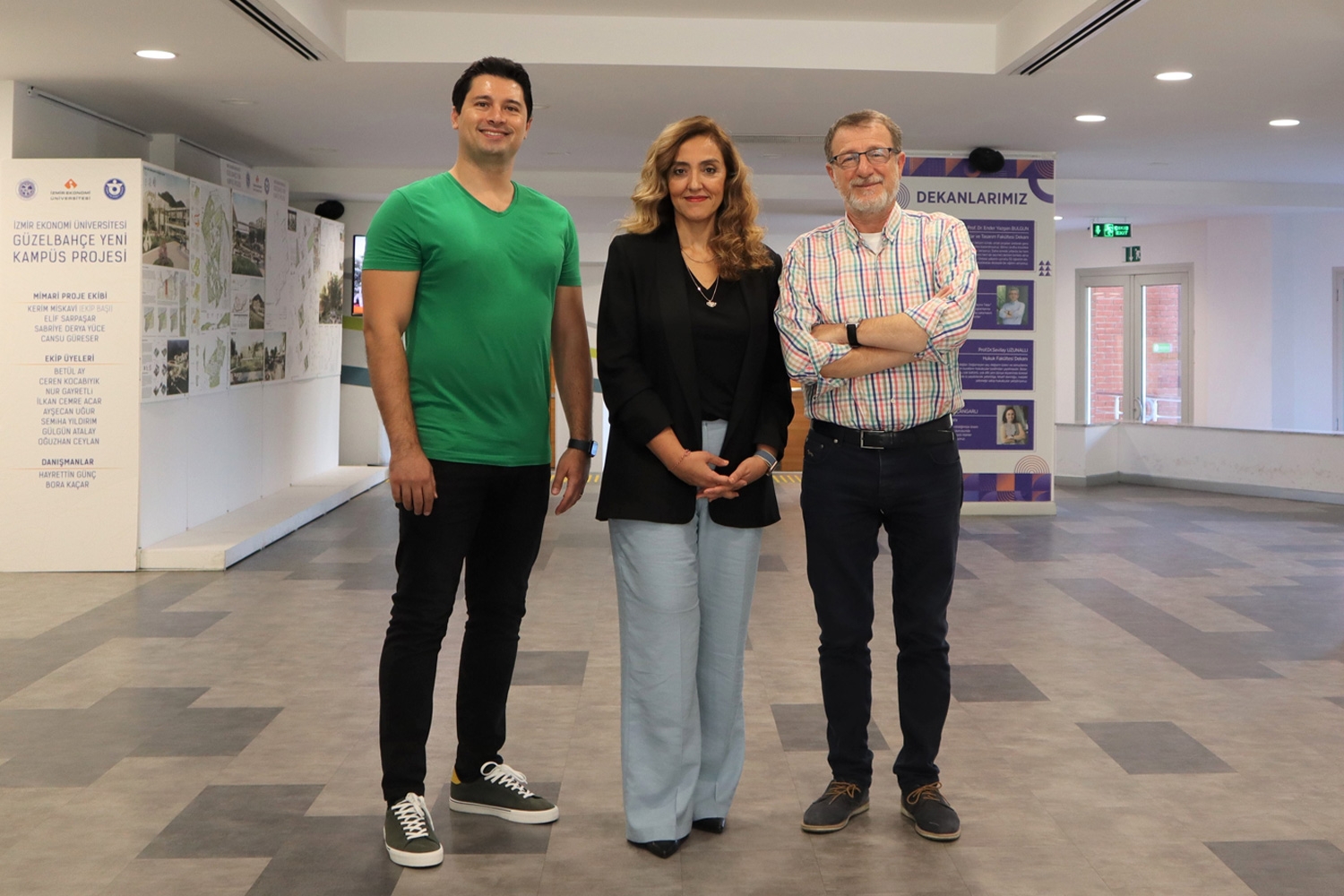

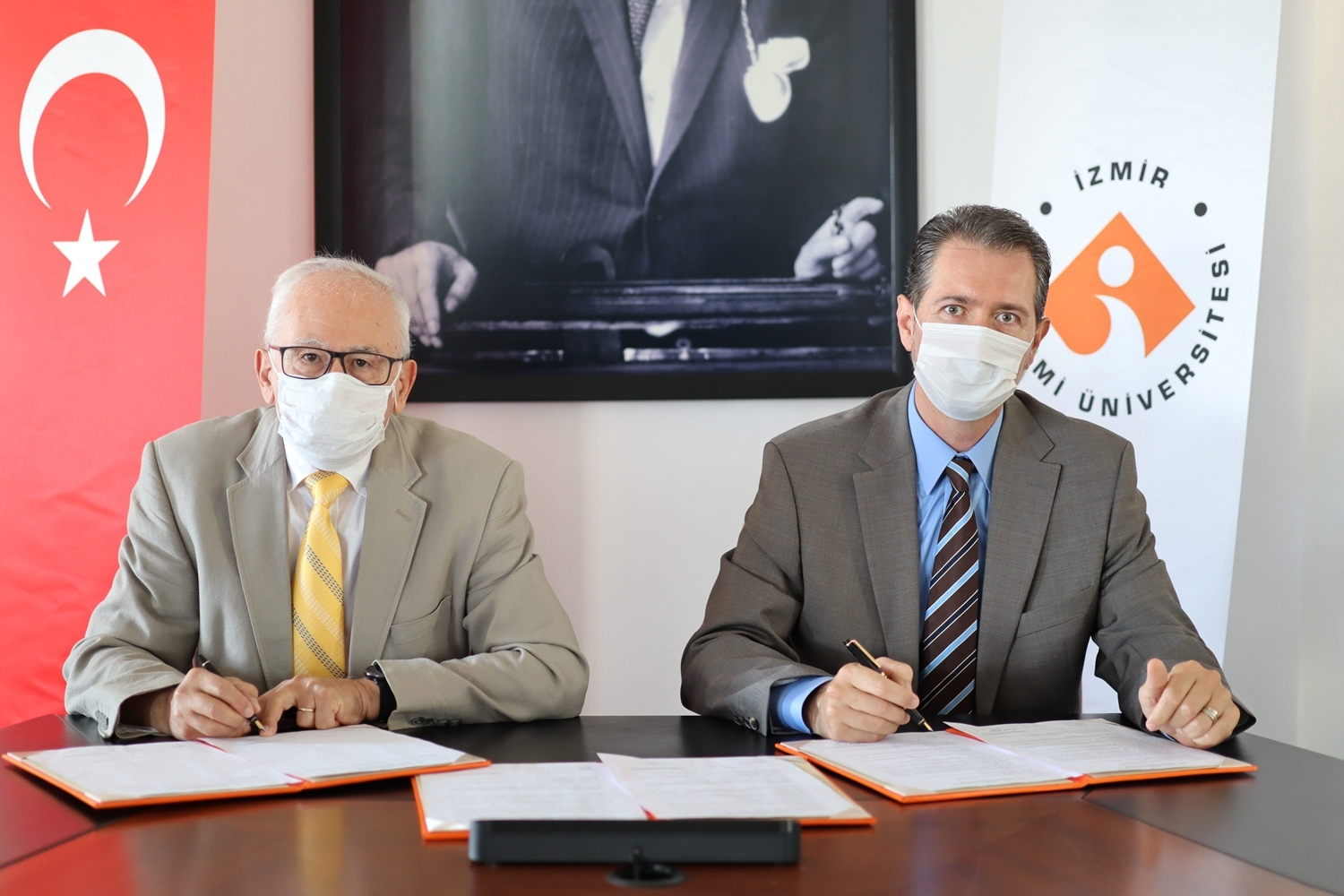

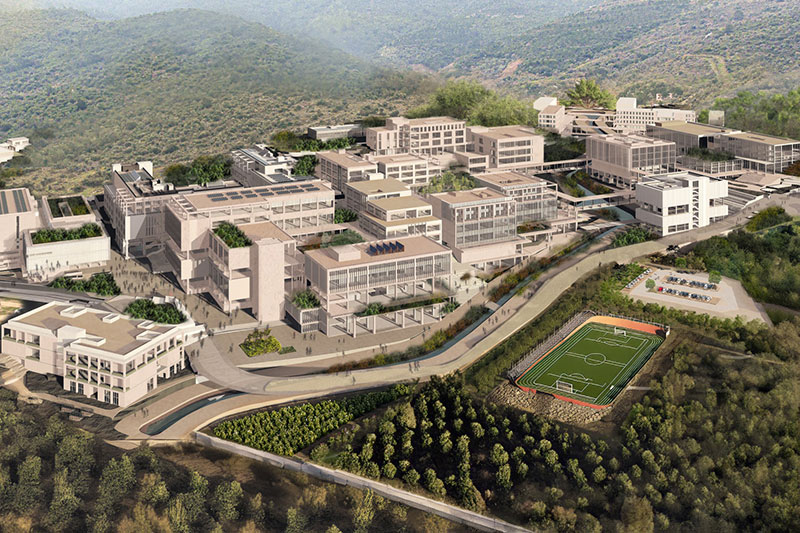
IZMIR UNIVERSITY OF ECONOMICS GÜZELBAHÇE CAMPUS
DetailsGLOBAL CAREER
As Izmir University of Economics transforms into a world-class university, it also raises successful young people with global competence.
More..CONTRIBUTION TO SCIENCE
Izmir University of Economics produces qualified knowledge and competent technologies.
More..VALUING PEOPLE
Izmir University of Economics sees producing social benefit as its reason for existence.
More..
You are one step ahead with your graduate education at Izmir University of Economics.