


- University
- Academic
- Schools/Vocational Schools
- Vocational School of Justice
- Vocational School
- Vocational School
- Department of Banking and Insurance (Turkish)
- Department of Computer Programming (Turkish)
- Department of Foreign Trade (Turkish)
- Department of Graphic Design (Turkish)
- Department of Interior Design (Turkish)
- Department of Construction Technology (Turkish)
- Department of Occupational Health and Safety (Turkish)
- Department of Media and Communication (Turkish)
- Department of Architectural Restoration (Turkish)
- Department of Radio and Tv Programming (Turkish)
- Department of Civil Aviation Cabin Services (Turkish)
- Department of Civil Aviation Transportation Management (Turkish)
- Department of Tourism and Hotel Management (Turkish)
- Department of Applied English Translation
- Vocational School Of Health Services
- Vocational School Of Health Services
- Department of Child Development (Turkish)
- Department of Physiotherapy (Turkish)
- Department of Paramedic (Turkish)
- Department of Opticianry (Turkish)
- Department of Medical Documentation and Secreteriat (Turkish)
- Department of Medical Imaging Techniques (Turkish)
- Department of Medical Laboratory Techniques (Turkish)
- Department of Elderly Care (Turkish)
- School of Applied Management Sciences
- School of Foreign Languages
- Faculties
- Faculty of Arts and Sciences
- Faculty of Fine Arts and Design
- Faculty of Law
- Faculty of Communication
- Faculty of Business
- Faculty of Engineering
- Faculty of Engineering
- Department of Computer Engineering
- Department of Biomedical Engineering
- Department of Electrical and Electronics Engineering
- Department of Industrial Engineering
- Department of Food Engineering
- Department of Genetics and Bioengineering
- Department of Aerospace Engineering
- Department of Civil Engineering
- Department of Mechanical Engineering
- Department of Mechatronics Engineering
- Department of Software Engineering
- Faculty of Health Sciences
- Medicine
- Graduate School
- Common Courses
- Schools/Vocational Schools
- Research
- Research Centers
- Library
- Smart Campus
- Technology Transfer Office
- İzmir Sciencepark
- Continuous Education Center (EKOSEM)
- Children's University
- Ethics Committee
- Teaching and Learning Center (EKOEĞİTİM)
- Psychology Application and Research Center
- Researcher Training Coordinatorship
- Research Collaborations And Innovation Coordinatorship
- Campus
- INTERNATIONAL
- Contact
- 25TH YEAR
Department of Business Administration
GEET 310 | Course Introduction and Application Information
| Course Name |
Gender and Media
|
|
Code
|
Semester
|
Theory
(hour/week) |
Application/Lab
(hour/week) |
Local Credits
|
ECTS
|
|
GEET 310
|
Fall/Spring
|
3
|
0
|
3
|
4
|
| Prerequisites |
None
|
|||||
| Course Language | ||||||
| Course Type |
Second Foreign Language
|
|||||
| Course Level |
-
|
|||||
| Mode of Delivery | - | |||||
| Teaching Methods and Techniques of the Course | - | |||||
| National Occupation Classification | - | |||||
| Course Coordinator | ||||||
| Course Lecturer(s) | ||||||
| Assistant(s) | - | |||||
| Course Objectives | This course conceptualizes gender as a category of knowledge and aims to understand how gender is constructed by the media. We will consider gender as a constitutive element of identity and by analyzing its intersection with other categories such as race, class, nation and sexuality, we will grasp the importance of the representation of gender in media and its meaning for our lives. The course consists of lectures, screenings and discussions revolving around critical analysis of and engagement with contemporary examples of film, television, adverts and new media. |
| Learning Outcomes |
The students who succeeded in this course;
|
| Course Description | his course examines various images and representations of gender in media paying particular attention to contemporary discussions. Employing theories from cultural studies, media, film, reception and gender studies, it explores different processes and practices of gender, specifically in terms of media representations of femininity, masculinity and queerness. The media plays a major role in "constructing" gender, and “popular” views of what appropriate gendering is, in turn, shape how we communicate with each other. Participation (20%) – You should come to class prepared to ask questions and ready to make lively, insightful, substantive and respectful contributions to our discussion of the course materials. Written Assignment (20%): These assignments require the students to select a theme we have covered in the class and conduct a detailed analysis of how that example reflects the context in which it was produced/distributed/exhibited. |
| Related Sustainable Development Goals |

|
|
|
Core Courses | |
| Major Area Courses | ||
| Supportive Courses | ||
| Media and Management Skills Courses | ||
| Transferable Skill Courses |
WEEKLY SUBJECTS AND RELATED PREPARATION STUDIES
| Week | Subjects | Related Preparation |
| 1 | Course Introduction: Why Study Gender in the Media? | Lecture: Course framework, expectations, and introduction to the media analysis assignment |
| 2 | Introduction to Gender and Media | Reading: West and Zimmerman (1987), ‘Doing Gender’, Gender & Society, 1(2), 125–151 Video: Chimamanda Ngozi Adichie, ‘We Should All Be Feminists’ (TED) |
| 3 | Global Perspectives on Gender Representation | Lecture: Gender in Western and non-Western media Reading: Gill (2007), Gender and the Media, Chapter 3 Reading: Tuchman (1978), ‘The Symbolic Annihilation of Women by the Mass Media’ Video: Miss Representation, official trailer |
| 4 | Feminism and Media | Lecture: Waves of feminism in the media Reading: hooks (2000), Feminism Is for Everybody, Chapters 4 and 6 Reading: Crenshaw (1989), ‘Demarginalizing the Intersection of Race and Sex’, pp. 139–152 Video: Kimberlé Crenshaw, ‘The Urgency of Intersectionality’ (TED, 2016) |
| 5 | Masculinity and Media | Lecture: Toxic masculinity and representation Reading: Connell (1995), Masculinities, Chapter 1 Reading: Ging (2019), ‘Alphas, Betas, and Incels’, Men and Masculinities, 22(4), 638–657 Video: The Mask You Live In, official trailer |
| 6 | Queer theory and queer in media | Lecture: Visibility and stereotyping of LGBTQ+ identities Reading: Butler (1988), ‘Performative Acts and Gender Constitution’, Theatre Journal, 40(4), 519–531 Reading: Stryker (2008), Transgender History, Chapter 1 Video: Disclosure, official trailer |
| 7 | Social Media and Influencers | Lecture: Gender performances on social media Reading: Marwick (2013), Status Update, Chapter 3, ‘The Fabulous Lives of Micro-Celebrities’ Video examples: Gender performance on Instagram and TikTok, selected by the instructor |
| 8 | Midterm | |
| 9 | Gender and Film | Lecture: Gender in global cinema Reading: Mulvey (1975), ‘Visual Pleasure and Narrative Cinema’, Screen, 16(3), 6–18 Video: Selected film clips for gender analysis |
| 10 | Media, Race, and Intersectional Representation | Lecture: The oppositional gaze as a response to Mulvey Reading: hooks (1992), ‘The Oppositional Gaze: Black Female Spectators’, in Black Looks Video: Race, gender, and intersectionality, selected by the instructor |
| 11 | Gender and News Media | Lecture: Gendered narratives in global news Reading: Ross (2010), Gendered Media, Chapter 2 Video examples: Gender bias in news media Media analysis assignment due |
| 12 | Algorithms, Artificial Intelligence, and Gender | Lecture: Search, recommendation systems, and gendered visibility Reading: Noble (2018), Algorithms of Oppression, Introduction and Chapter 1 Case study: Deepfakes and image-based violence, current news materials |
| 13 | Gender and Media in Turkey | Reading: Burul and Eslen-Ziya (2018), ‘Understanding “New Turkey” Through Women’s Eyes: Gender Politics in Turkish Daytime Talk Shows’, Middle East Critique, 27(2), 179–192 Report: CEID Gender Equality Monitoring Report, selected sections |
| 14 | Media Ethics in Reporting Gender-Based Violence Guidelines for Reporting on Gender-based Violence | Reading: Guidelines for Reporting on Violence Against Women, Ethical Journalism Initiative Case study: Analysis of selected news reports |
| 15 | Evaluation of the term | Reading: Gauntlett (2008), Media, Gender and Identity, Introduction and Conclusion Discussion: Counterarguments to the critical frameworks developed during the semester |
| 16 | Finals Week |
| Course Notes/Textbooks | |
| Suggested Readings/Materials | The course uses the sources that are listed above |
EVALUATION SYSTEM
| Semester Activities | Number | Weigthing |
| Participation |
1
|
10
|
| Laboratory / Application | ||
| Field Work | ||
| Quizzes / Studio Critiques | ||
| Portfolio | ||
| Homework / Assignments |
1
|
30
|
| Presentation / Jury | ||
| Project | ||
| Seminar / Workshop | ||
| Oral Exams | ||
| Midterm |
1
|
30
|
| Final Exam |
1
|
30
|
| Total |
| Weighting of Semester Activities on the Final Grade |
3
|
70
|
| Weighting of End-of-Semester Activities on the Final Grade |
1
|
30
|
| Total |
ECTS / WORKLOAD TABLE
| Semester Activities | Number | Duration (Hours) | Workload |
|---|---|---|---|
| Theoretical Course Hours (Including exam week: 16 x total hours) |
16
|
3
|
48
|
| Laboratory / Application Hours |
16
|
0
|
|
| Study Hours Out of Class |
14
|
2
|
28
|
| Field Work |
0
|
||
| Quizzes / Studio Critiques |
0
|
||
| Portfolio |
0
|
||
| Homework / Assignments |
1
|
10
|
10
|
| Presentation / Jury |
0
|
||
| Project |
0
|
||
| Seminar / Workshop |
0
|
||
| Oral Exam |
0
|
||
| Midterms |
1
|
10
|
10
|
| Final Exam |
1
|
24
|
24
|
| Total |
120
|
COURSE LEARNING OUTCOMES AND PROGRAM QUALIFICATIONS RELATIONSHIP
|
#
|
Program Competencies/Outcomes |
* Contribution Level
|
|||||
|
1
|
2
|
3
|
4
|
5
|
|||
| 1 |
To be able to solve problems with an analytical and holistic viewpoint in the field of business administration. |
-
|
-
|
-
|
-
|
-
|
|
| 2 |
To be able to present the findings and solutions to the business problems in written and oral formats. |
-
|
-
|
-
|
-
|
-
|
|
| 3 |
To be able to interpret the application of business and economic concepts, and philosophies at the national and international levels. |
-
|
-
|
-
|
-
|
-
|
|
| 4 |
To be able to use innovative and creative approach for real-life business situations. |
-
|
-
|
-
|
-
|
-
|
|
| 5 |
To be able to demonstrate leadership skills in different business situations. |
-
|
-
|
-
|
-
|
-
|
|
| 6 |
To be able to interpret the reflections of new technologies and softwares to business dynamics. |
-
|
-
|
-
|
-
|
-
|
|
| 7 |
To be able to integrate knowledge gained in the five areas of business administration (marketing, production, management, accounting, and finance) through a strategic perspective. |
-
|
-
|
-
|
-
|
-
|
|
| 8 |
To be able to act in accordance with the scientific and ethical values in studies related to business administration. |
-
|
-
|
-
|
-
|
-
|
|
| 9 |
To be able to work efficiently and effectively as a team member. |
-
|
-
|
-
|
-
|
-
|
|
| 10 |
To be able to have an ethical perspective and social responsiveness when making and evaluating business decisions. |
-
|
-
|
-
|
-
|
-
|
|
| 11 |
To be able to collect data in the area of business administration and communicate with colleagues in a foreign language ("European Language Portfolio Global Scale", Level B1). |
-
|
-
|
-
|
-
|
-
|
|
| 12 |
To be able to speak a second foreign language at a medium level of fluency efficiently. |
-
|
-
|
-
|
-
|
-
|
|
| 13 |
To be able to relate the knowledge accumulated throughout the human history to their field of expertise. |
-
|
-
|
-
|
-
|
-
|
|
*1 Lowest, 2 Low, 3 Average, 4 High, 5 Highest
NEWSALL NEWS

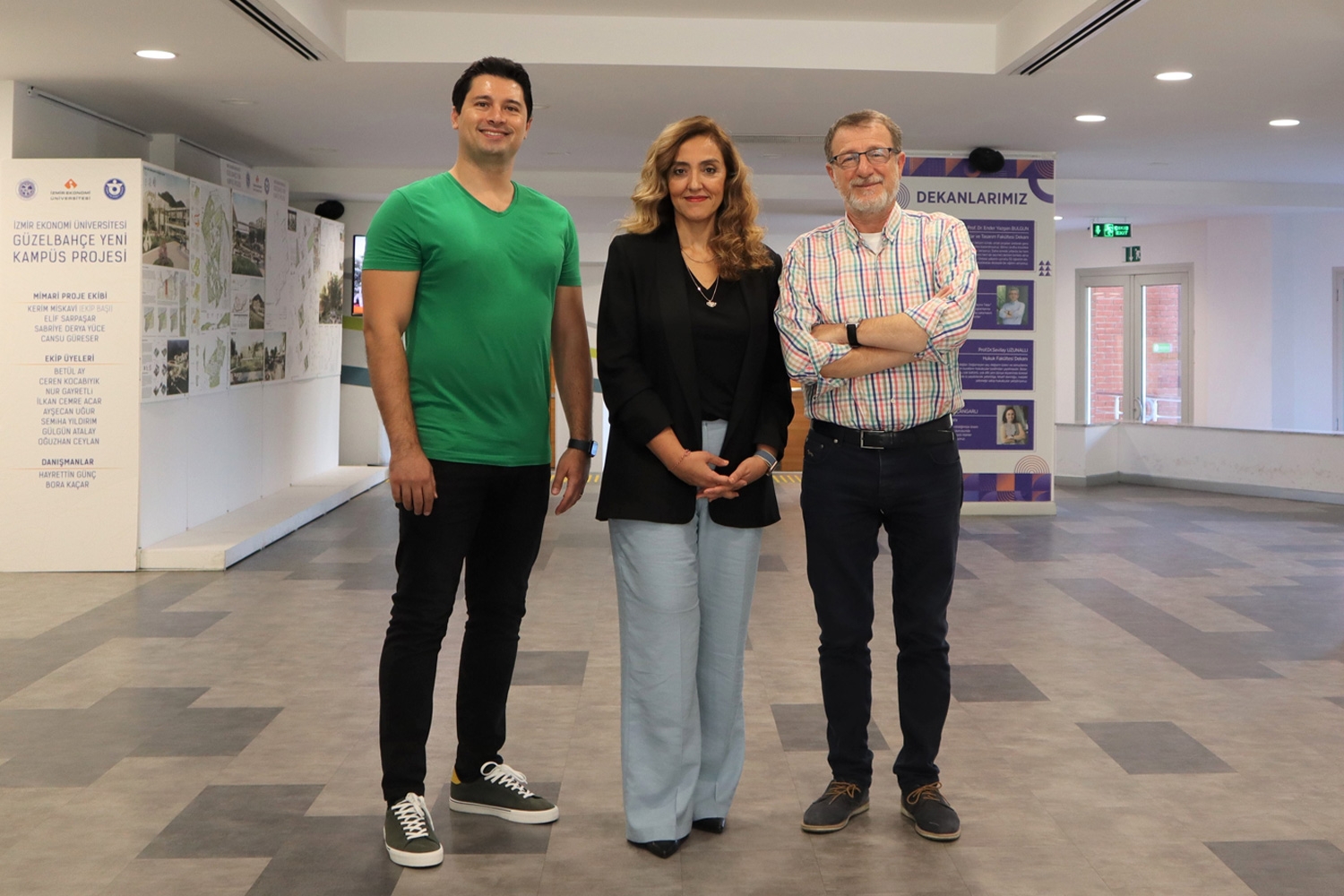

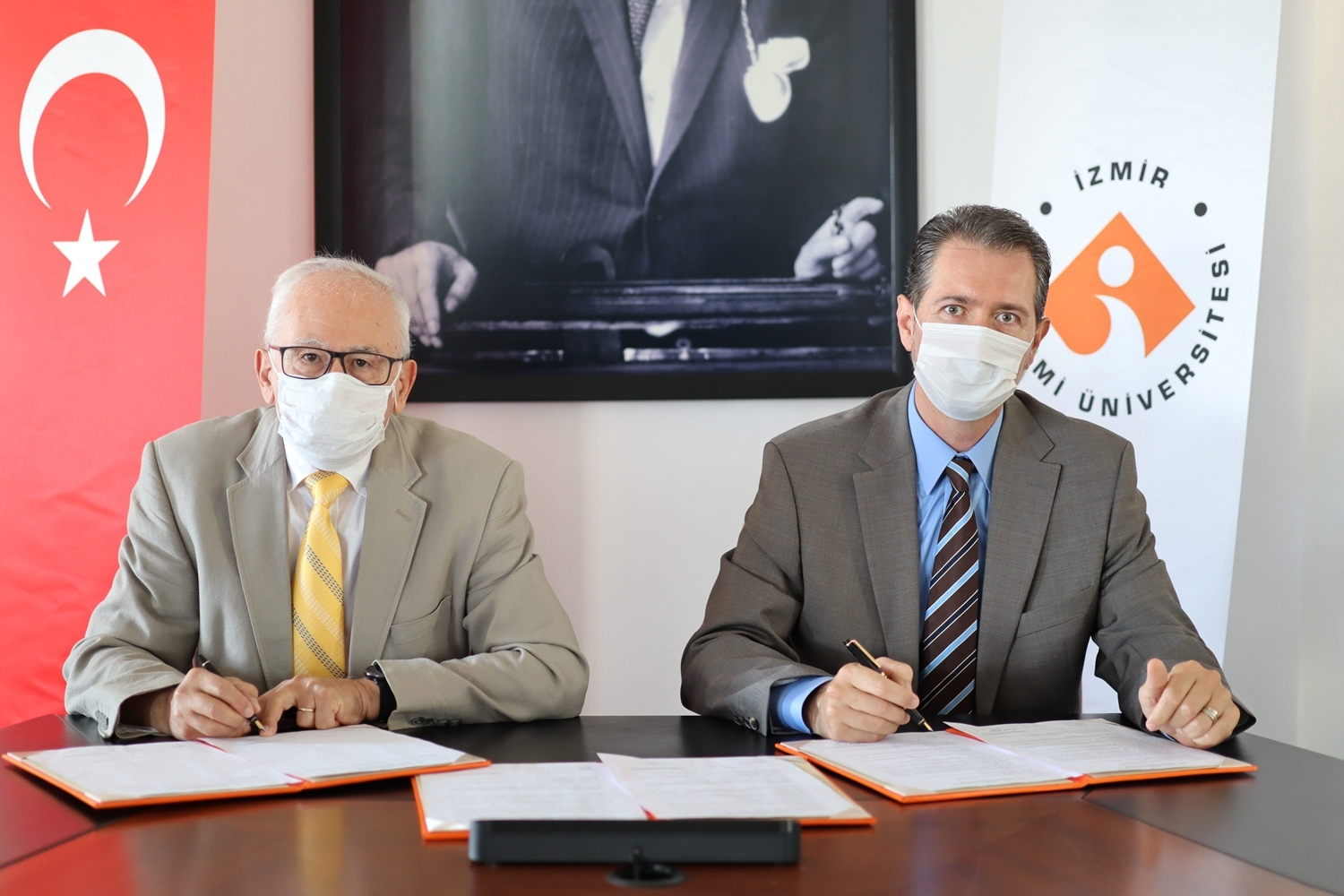

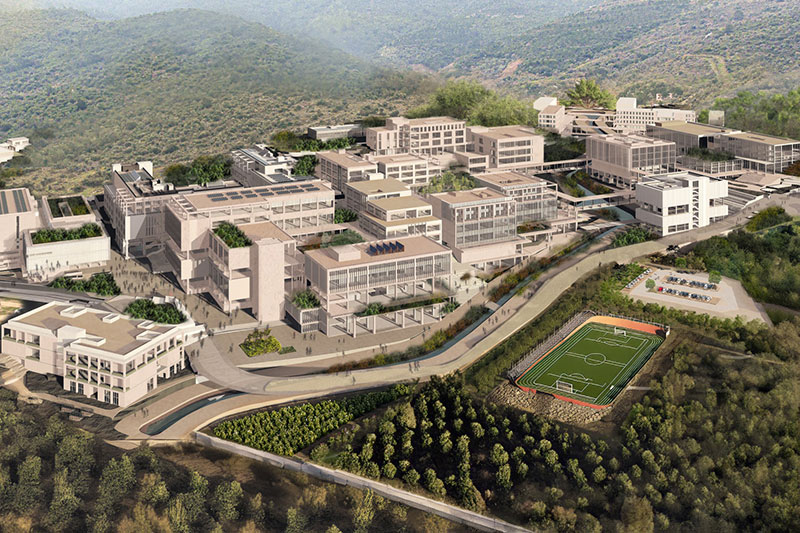
IZMIR UNIVERSITY OF ECONOMICS GÜZELBAHÇE CAMPUS
DetailsGLOBAL CAREER
As Izmir University of Economics transforms into a world-class university, it also raises successful young people with global competence.
More..CONTRIBUTION TO SCIENCE
Izmir University of Economics produces qualified knowledge and competent technologies.
More..VALUING PEOPLE
Izmir University of Economics sees producing social benefit as its reason for existence.
More..
You are one step ahead with your graduate education at Izmir University of Economics.